Introduction
What to do
Where to eat
When to visit
How to get there
Where to stay
Hiring a car
Local costs


Agra is dominated by the Taj Mahal, one of the world's most awe-inspiring architectural (and romantic) achievements. But there's more to this bustling Indian metropolis than just the - admittedly gorgeous - mausoleum.
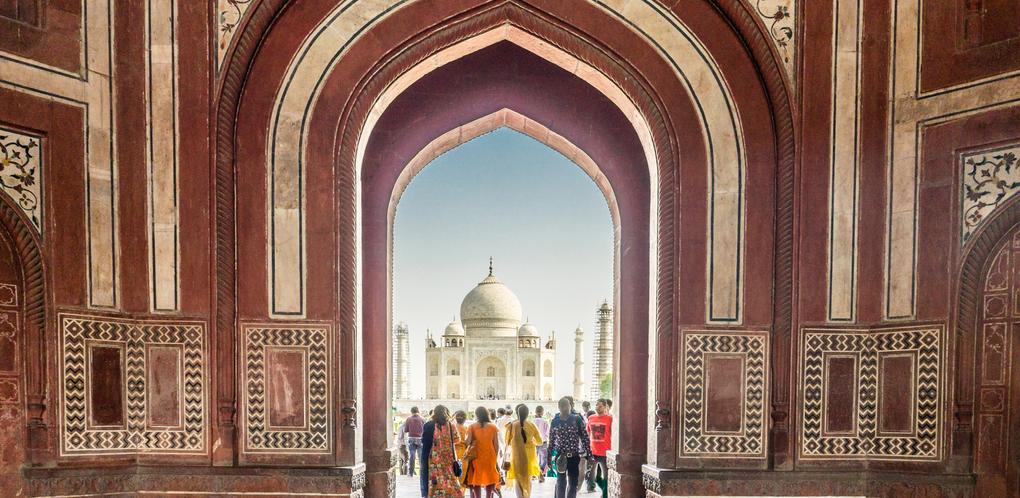
If you can tear yourself away from the Taj, the Mughal legacy stretches to epic forts, similarly grand mausoleums, and mosques, while the city itself has some vibrant markets to dive into in search of craft souvenirs.
Add in the chance to visit nearby safari parks and lodges and the opportunity to visit other nearby cities like Jaipur and Bharatpur, with its colorful Holi celebrations, and you really do have a multidimensional tourist magnet.
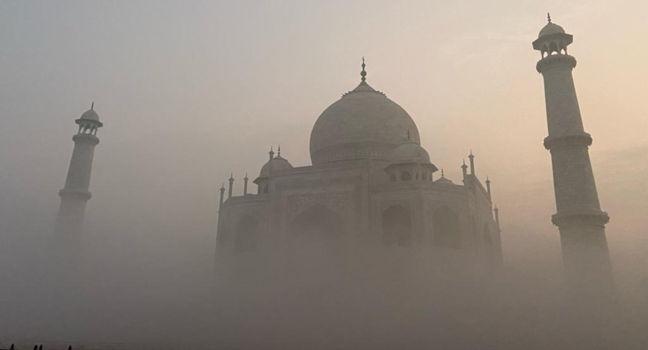
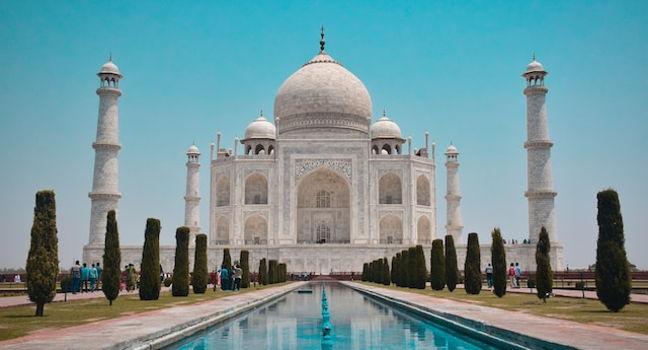
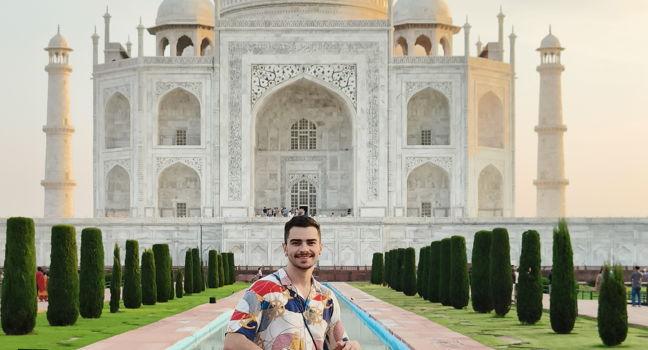
There's no denying the star of the show in Agra. Built by Shah Jahan in the mid-17th century in memory of his wife, Mumtaz Mahal, it has been described by the great Indian poet Tagore as a "teardrop on the cheek of time." It's a stunning marble tomb, with four delicate minarets and a spectacular dome, and is rightly classed as a wonder of the world.
The Mughals (who ruled northern India until the British arrived in the late 18th century) made Agra their capital, and the historic attractions reach far beyond the Taj Mahal. The Red Fort is also a UNESCO World Heritage Site, there's the abandoned capital at Fatehpur Sikri and the tomb of Akbar the Great - only marginally less impressive than the Taj itself.
Once you've had your fill of historical architecture, there are plenty of out-of-town escapes to explore. The 1890s Chambal Safari Lodge is a few miles to the southeast, and offers great wildlife spotting opportunities. The Keoladeo National Park lies to the west and is a world-famous bird watching spot.
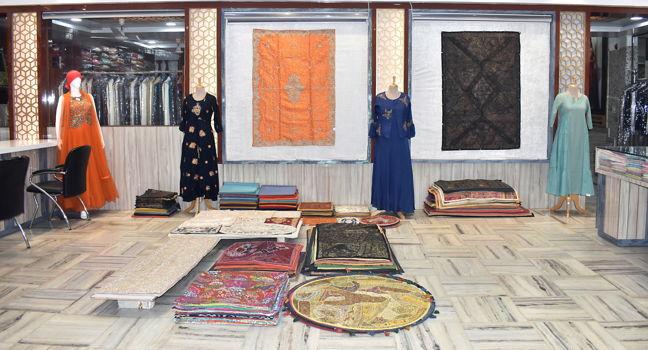
Back in Agra, shopping lovers will adore the city's variety of lively markets. You can snap up footwear bargains at Raja Ki Mandi, dine on street food and find craft souvenirs at Sadar bazaar, or haggle for gold and silver jewelry at Kinari bazaar.
Mughal cuisine is one of India's most famous exports, and Agra is one of the best places to experience it in all its glory. Whether you need a filling biryani, a spicy lamb Rogan Josh, or a slow-cooked Nihari beef curry, Agra's street food vendors and fine restaurants will oblige.
The last remnants of Mughal architecture are alive even today in the Taj Mahal. Every year, this UNESCO World Heritage site attracts anywhere from seven to eight million visitors. So majestic and imperial are her exteriors that no one would ever guess, at first glance, that the ivory-marble facade is actually a mausoleum. Resting on the banks of the Yamuna river, the palatial tomb, which Mughal emperor Shah Jahan built for his wife, Mumtaz Mahal, also houses a mosque and a guest house. The exteriors are flanked by lush gardens and pristine pathways.
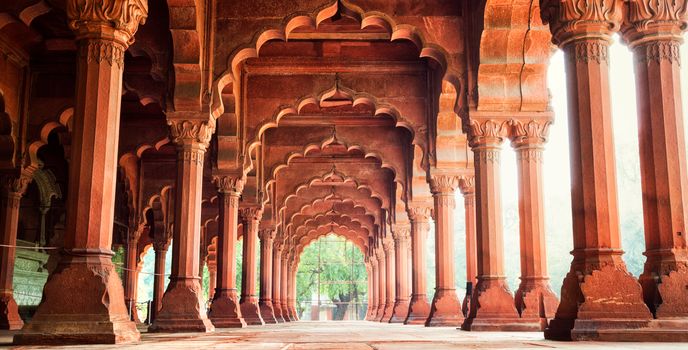
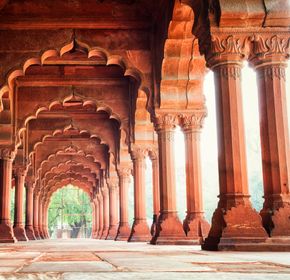
With its 380,000 square feet and semi-circular design, not to mention the distinctive red 'terra' look of sandstone fortification, the Agra Fort is a piece of both Indian history and Indian architecture. It is rumoured that the great Mughal emperor Shah Jahan died in one of its towers (with a view of the Taj Mahal, of course). Besides its sprawling size, the Agra Fort features the majestic Delhi Gate, the Diwan-i-am and the gorgeous decorations on its exalted columns will mesmerize you for the day.
Before the Taj Mahal, there was a first draft: Itmad-ud-Daulah's tomb. Just like its successor, this popular tomb is also a decadent monument left from Mughal rule, featuring the palatial structure in the centre, surrounded by serene and manicured gardens. Though smaller in size, it is no less stately, often called the 'jewel box'. Climb the stairs to the top of its domed minarets or walk across to the gate for a sequestered view of the mausoleum. The detailed carvings and decorations on the exterior walls will make you realize this is no mere resting place.
The city that Akbar built himself is the entrance to a city that houses many historical spots of significance, including the famed Jama mosque. The most recognizable of these is the Buland Darwaza, a 54-meter-high entrance, intricately carved and designed. The city of Fatehpur Sikri houses many beautiful tombs, such as the Tomb of Salim Chisti, the Panch Mahal, Turkish baths known as 'hammams' and the Diwan-i-Khas, with gorgeous geometric designs and serpentine columns that hold up the circular platform, fit for a king.
Of course, no tour of Indian Mughal reign would be complete without a visit to the famed emperor Akbar's tomb. While the renowned emperor rests peacefully under a cenotaph today, thanks to his son Jahangir, the tomb and building has plenty of stories of splendour, conflict and sacred symbols. It was eventually restored by the British Lord Curzon. Today, the grand Circumferential Gallery that guards Akbar's grave, its impeccable front facade, the beautifully detailed inlay panels on the southern gate and the scripture in calligraphic hand over the doorways stand in for an era and aesthetic long gone but unforgotten.
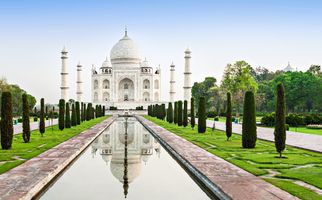
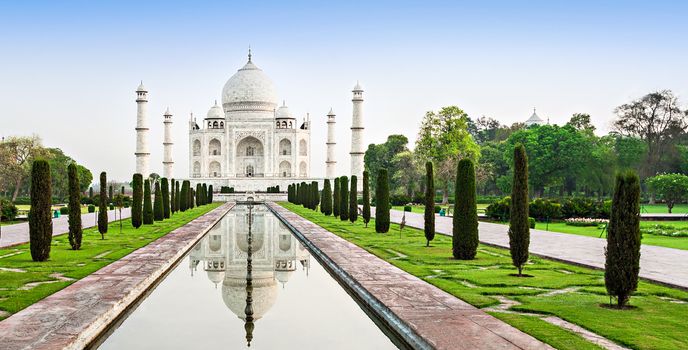
The last remnants of Mughal architecture are alive even today in the Taj Mahal. Every year, this UNESCO World Heritage site attracts anywhere from seven to eight million visitors. So majestic and imperial are her exteriors that no one would ever guess, at first glance, that the ivory-marble facade is actually a mausoleum. Resting on the banks of the Yamuna river, the palatial tomb, which Mughal emperor Shah Jahan built for his wife, Mumtaz Mahal, also houses a mosque and a guest house. The exteriors are flanked by lush gardens and pristine pathways.
With its 380,000 square feet and semi-circular design, not to mention the distinctive red 'terra' look of sandstone fortification, the Agra Fort is a piece of both Indian history and Indian architecture. It is rumoured that the great Mughal emperor Shah Jahan died in one of its towers (with a view of the Taj Mahal, of course). Besides its sprawling size, the Agra Fort features the majestic Delhi Gate, the Diwan-i-am and the gorgeous decorations on its exalted columns will mesmerize you for the day.
Before the Taj Mahal, there was a first draft: Itmad-ud-Daulah's tomb. Just like its successor, this popular tomb is also a decadent monument left from Mughal rule, featuring the palatial structure in the centre, surrounded by serene and manicured gardens. Though smaller in size, it is no less stately, often called the 'jewel box'. Climb the stairs to the top of its domed minarets or walk across to the gate for a sequestered view of the mausoleum. The detailed carvings and decorations on the exterior walls will make you realize this is no mere resting place.
The city that Akbar built himself is the entrance to a city that houses many historical spots of significance, including the famed Jama mosque. The most recognizable of these is the Buland Darwaza, a 54-meter-high entrance, intricately carved and designed. The city of Fatehpur Sikri houses many beautiful tombs, such as the Tomb of Salim Chisti, the Panch Mahal, Turkish baths known as 'hammams' and the Diwan-i-Khas, with gorgeous geometric designs and serpentine columns that hold up the circular platform, fit for a king.
Of course, no tour of Indian Mughal reign would be complete without a visit to the famed emperor Akbar's tomb. While the renowned emperor rests peacefully under a cenotaph today, thanks to his son Jahangir, the tomb and building has plenty of stories of splendour, conflict and sacred symbols. It was eventually restored by the British Lord Curzon. Today, the grand Circumferential Gallery that guards Akbar's grave, its impeccable front facade, the beautifully detailed inlay panels on the southern gate and the scripture in calligraphic hand over the doorways stand in for an era and aesthetic long gone but unforgotten.
The last remnants of Mughal architecture are alive even today in the Taj Mahal. Every year, this UNESCO World Heritage site attracts anywhere from seven to eight million visitors. So majestic and imperial are her exteriors that no one would ever guess, at first glance, that the ivory-marble facade is actually a mausoleum. Resting on the banks of the Yamuna river, the palatial tomb, which Mughal emperor Shah Jahan built for his wife, Mumtaz Mahal, also houses a mosque and a guest house. The exteriors are flanked by lush gardens and pristine pathways.
With its 380,000 square feet and semi-circular design, not to mention the distinctive red 'terra' look of sandstone fortification, the Agra Fort is a piece of both Indian history and Indian architecture. It is rumoured that the great Mughal emperor Shah Jahan died in one of its towers (with a view of the Taj Mahal, of course). Besides its sprawling size, the Agra Fort features the majestic Delhi Gate, the Diwan-i-am and the gorgeous decorations on its exalted columns will mesmerize you for the day.
Mughal cuisine has spread across the world in the form of dishes like biryanis and Rogan Josh curries, and you can taste the real thing in Agra. Check out superb curry restaurants like Pinch of Spice and Pind Balluchi (both in Tajganj), Joney's Place (near the Taj Mahal), and Esphahan (near the center of town). Try to find time to sample the city's street food as well. Chaat (savory snacks) is a specialty, and you'll find vendors all over town. Meals will tend to be very affordable, varying from ₹50 for street food to ₹1,000 at upscale restaurants.
The best time to visit Agra tends to be between November and March, when you can expect dry weather and relatively mild temperatures. After April, the temperatures and humidity rise sharply, and the summer months can be a little oppressive for many tourists. However, things start to cool down in October, which can be a good month to travel if you want to avoid peak vacation season crowds.

Most visitors to Agra fly into New Delhi's Indira Gandhi International Airport (DEL). From there, you can take the subway to New Delhi Railway Station, then catch a train to Agra (2 hours 55 minutes, between ₹450 and ₹1,200).
India has an excellent rail network, and Agra can be reached from almost every major city by train. Journey times are around three hours from New Delhi, three hours from Jaipur, and eight hours from Mumbai. The majority of trains stop at Agra's Cantt station. From there, a taxi to city center hotels will cost about ₹150, while auto rickshaws will cost ₹50.
If you touch down at New Delhi airport, you'll find car rental companies like Autoriders and Europcar nearby. From there, the best route is to follow highway 48 southwards, then turn left onto the Kundli Manesar Palwal Expressway at Panchgaon, before changing to highway 19 at Palwal, which will take you straight to Agra.
Rajasthan's government runs RSRTC buses to cities like Jaipur in the province, and there are also daily bus connections between Delhi and Agra (journey time 4-5 hours, ₹300). Most buses will stop at the Idgah Bus Stand in the south of the city, and it will cost around ₹100 to take a taxi to city center hotels.
Dharmapuri - situated a couple of miles northeast of the heart of modern Agra, Dharmapuri is the home of the Taj Mahal, so it's the first place most visitors head for. The Taj is an obvious highlight, but don't forget to wander around Dharmapuri's acres of gorgeous lakes, pathways, and gardens.
Subhash Bazar - Agra's other great historical monuments are generally to be found in Subhash Bazar, a mile or two to the west of the Taj Mahal. Don't miss the incredible Red Fort, the Delhi Gate, and the 17th-century Moti Masjid mosque, all of which are Mughal masterworks as well.
Tajganj - just to the south of Dharmapuri, you'll find Tajganj. This opulent neighborhood is home to most of the city's luxury hotels, along with a huge collection of restaurants serving north Indian and European-influenced cuisine. It's the perfect base from which to explore the city's many historical sites.
Agra does not have a comprehensive public transportation system. However, the provincial government has remedied this gap by providing air-conditioned buses that cover the city's major sights (for ₹500 per person). While the tour offers excellent coverage, it can feel a little rushed, particularly at the Taj Mahal and Agra Fort.
Renting a taxi by the day is a popular way to see Agra's sights. It's a little more expensive than the tour bus (₹1,200) but provides much more flexibility. Alternatively, you can take auto rickshaws anywhere in town. As they cost about ₹20 per mile, they represent a great option for budget travelers.
You can enjoy even more flexibility with a privately rented car. Agra has plenty of rental companies to choose from, including locally based options like Agra Car Rental and Auto Travels. Rates tend to be very low, at around ₹70 per day for standard vehicles.
Agra's bazaars and malls are wonderful places to stock up on souvenirs during your stay. Raja Ki Mandi and Sadar Bazaar are both full of traders selling beautiful textiles, jewelry, and craft products, while Subhash Bazar is the city's number one clothing market. They are also great places to purchase Taj Mahal-themed figurines, with much lower prices than the sellers outside the mausoleum itself.
Agra doesn't have a large selection of supermarkets, so it can be a little tricky to shop for groceries. However, if you need to stock up on picnic materials, try stores like Vishal Mega Mart and Easyday (both of which have branches in Tajganj and near the Agra Fort). Prices will generally be very low, at ₹175 for a gallon of milk and ₹60 for 12 eggs.